Expand and strengthen the Special Unit
Sólrún H. Guðmundsdóttir Proppé writes on Vísir about Varða's analysis of the strain on the Special Unit: there appears to be consensus that the unit must grow, and that consensus must now deliver funding.
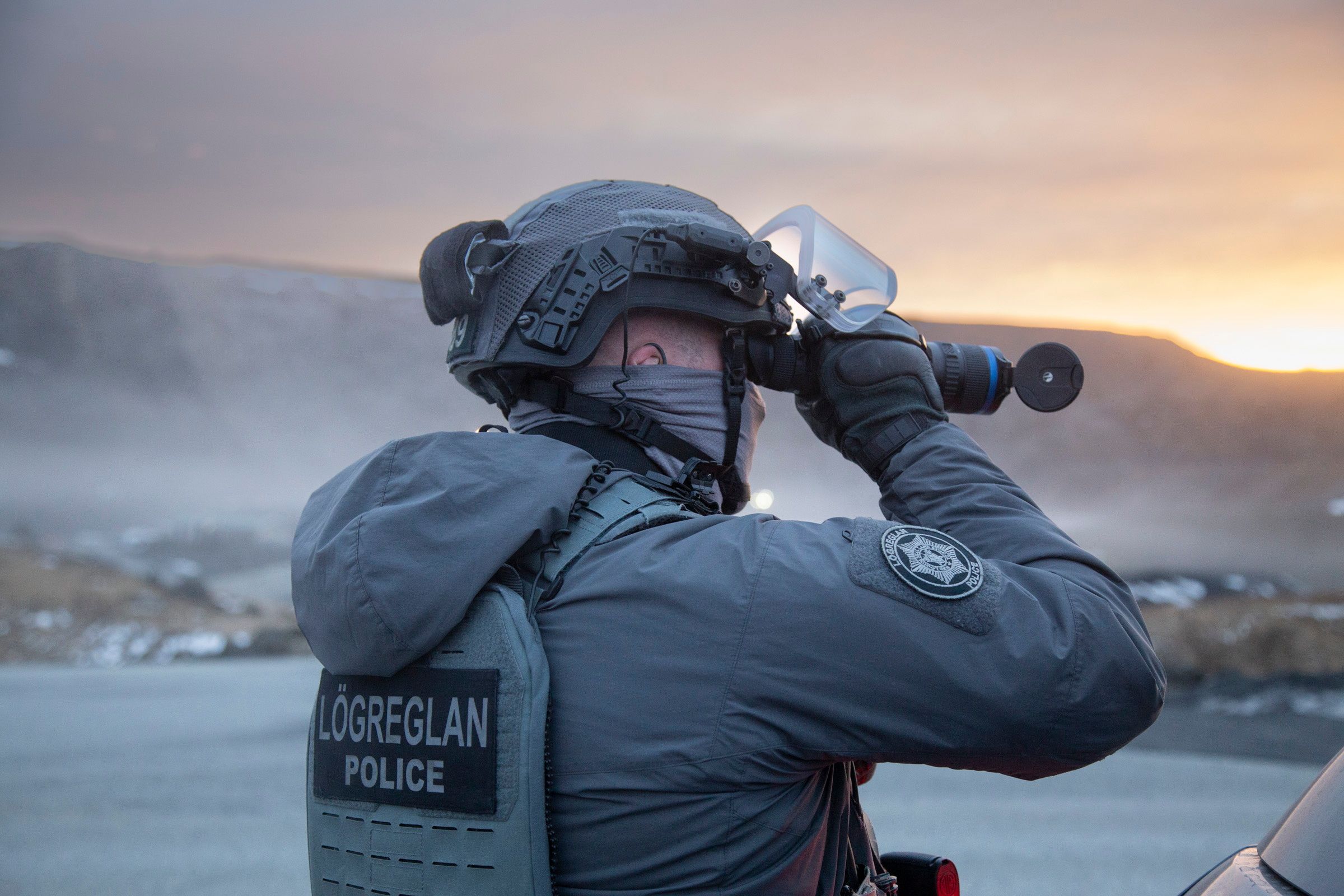
Armed call-outs for the National Commissioner of Police's Special Unit increased more than sevenfold in eleven years. Over the same period, the unit's staffing changed little. This is the finding of a new analysis recently published by Varða, a think tank on national security. Call-outs rose from 56 in 2014 to 424 in 2025. In spring 2025 the unit had 46 officers, the same number as in 2018. Varða's proposals are simple: secure funding to fill the ten positions that have already been authorised and, alongside that, carry out a comprehensive assessment and a long-term plan for the unit's staffing and development. The results of the assessment should be published as far as possible, so that the public and Parliament can take an informed part in the debate on security.
The response was not long in coming. The media covered the findings, and Karl Steinar Valsson, head of the National Commissioner of Police's analysis department, confirmed that the Special Unit was under heavy strain. He called for funding to fully staff the positions already authorised and put it plainly in an interview with RÚV: “These are expensive tasks; public safety is expensive. It costs money to live in a safe society.”
In an interview with mbl.is later the same day, Minister of Justice Þorbjörg Sigríður Gunnlaugsdóttir called the situation regrettable and said the Special Unit could easily number 70–80 officers. She also presented plans to reduce the number of police districts from nine to three and build larger, more capable police authorities. In her view, larger police authorities and a stronger Special Unit go well together. There appears to be consensus that the strain has increased and that the Special Unit needs to grow.
That consensus must now deliver funding and more officers. The Minister of Justice herself told Alþingi that the budget bill, in its current form, does not accommodate the increase. Appropriations to the National Commissioner of Police rise largely in line with general prices, leaving no room for more Special Unit officers. If the bill is passed unchanged, ten authorised positions will remain without secured funding. Alþingi therefore needs to add that funding to next year's budget. Otherwise the debate will end in interviews, headlines and general agreement that more must be done, without anything changing.
The ten positions are the first step. The government also needs to draw up a long-term plan for building up the Special Unit and the police's other armed response capabilities. The plan needs to assess the staffing, training, equipment and division of labour of the Special Unit and the district police tactical units, in light of the police's changing organisation and the security environment. It needs to span more than one budget year, ensure predictable funding and tie into a comprehensive defence and security policy for Iceland. It also needs to assess which investments fall under NATO's 1.5 percent framework.
The response to Varða's analysis shows that the government and the police see the problem. Now words must turn into decisions. The authorised positions must be funded, and work on the long-term plan must begin.
The author is Sólrún H. Guðmundsdóttir Proppé, researcher and analyst at Varða, a think tank on national security.
This article was first published in Icelandic on Vísir.is.
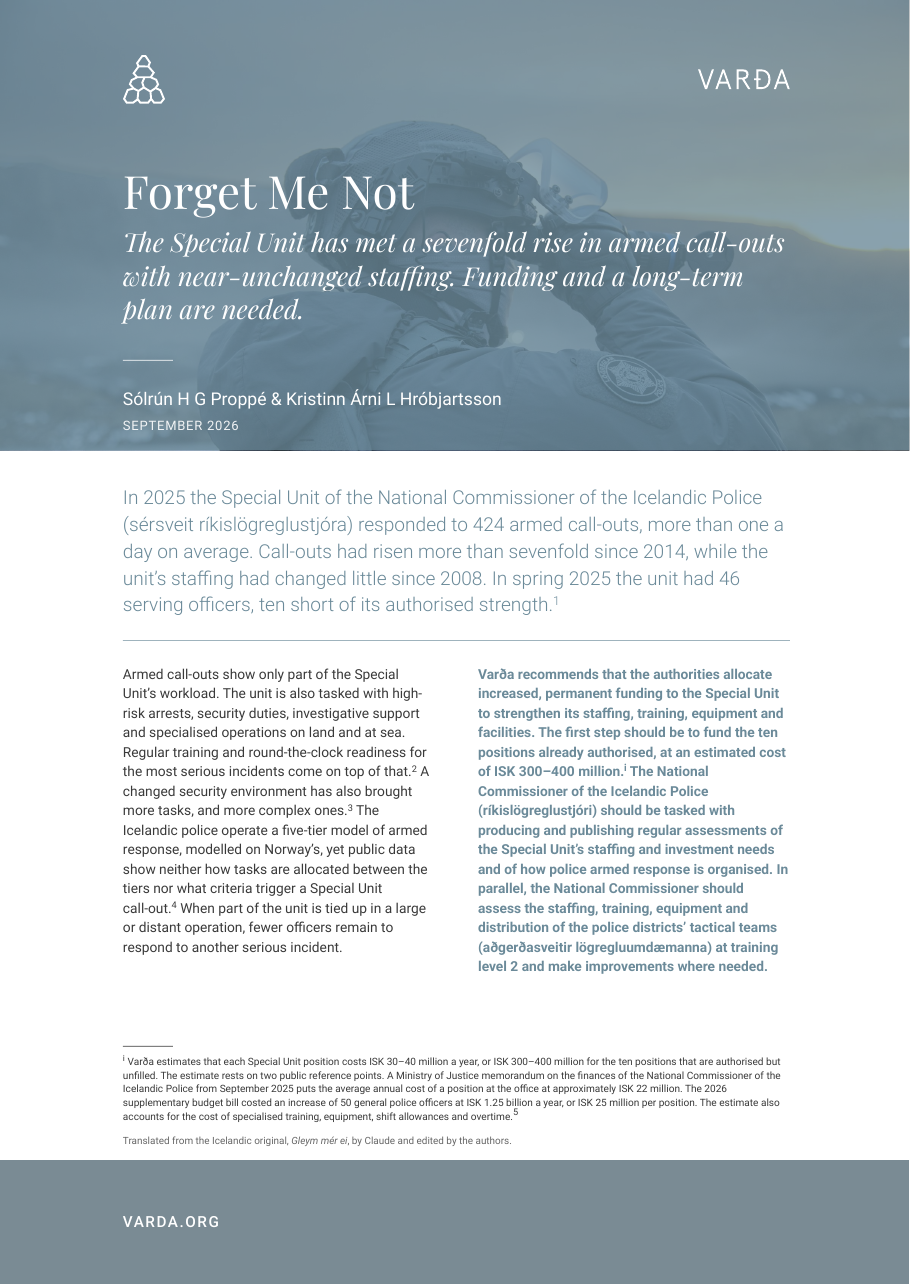 Forget Me NotThe Special Unit has met a sevenfold rise in armed call-outs with near-unchanged staffing. Funding and a long-term plan are needed.Read →