
Lame duck, wounded bear, or mad dog
Nordic-transatlantic relations after the U.S. midterms
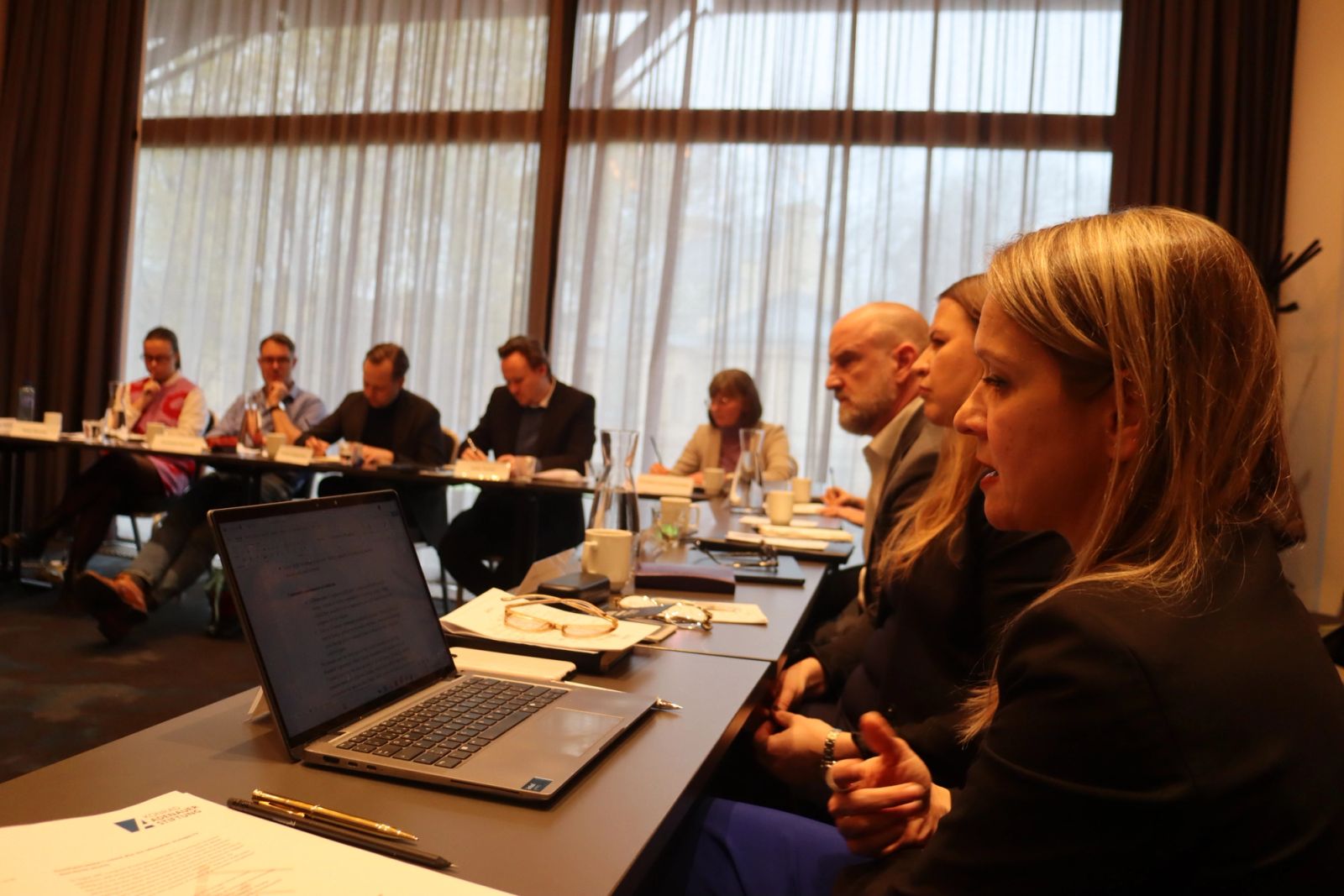
On 11 November, the Konrad-Adenauer-Stiftung Nordics (KAS-Nordics) and Varða convened a closed expert roundtable in Oslo to take stock of Nordic security after two developments that have shaped the regional debate. The first was Iceland’s referendum on 29 August, in which a narrow majority voted against resuming EU accession talks. The second was the state of transatlantic relations two years into the second Trump administration, following U.S. midterm elections that delivered control of both chambers of Congress to the Democrats. The roundtable brought together researchers and practitioners from Iceland, Greenland, the Faroe Islands, the wider Nordic region, Germany and the United States. The discussion was held under the Chatham House Rule.
Key takeaways
Iceland’s referendum was decided on sovereignty and the perceived negative impact to core Icelandic industries (e.g., fisheries), not on security.
The results of the midterm elections will change U.S. domestic politics more than U.S. policy on Europe. Europeans pinning their hopes on the Democrats may be disappointed.
Participants expected the President to make more use of executive power, not less, with the Arctic as a possible area of continued focus.
The Nordics are hedging by broadening partnerships rather than returning to deeper dependence on the United States.
The EU’s new Arctic strategy views the Arctic as important for resilience, supply chains, and security.
Context of the 2026 Iceland referendum
President Trump’s remarks challenging the sovereignty of Greenland and Iceland contributed to the political conditions framing Iceland’s referendum, but geopolitical and security considerations did not play a significant role in the domestic debate. Instead, the debate focused on domestic issues such as the cost of living and sovereignty. The debate was polarized. Parts of it treated the referendum as a vote on membership rather than on whether to resume membership negotiations. The two-step design, a vote on resuming talks ahead of any later vote on membership, may itself have made the question harder to communicate. While Iceland has historically outsourced much of its security policy to the United States, national sovereignty nonetheless played a major role in the lead-up to the referendum.
The No side’s key arguments revolved around a loss of sovereignty and control, particularly over natural resources and key industries. The Yes side presented adoption of the Euro as a way to counter inflationary pressure. On security, Icelandic approaches split between sheltering behavior in the Yes camp, which saw EU membership as a source of additional support and protection, and hedging behavior in the No camp. Despite Trump’s rhetoric towards both Greenland and Iceland, the outcome gives no sign that the EU is currently being considered by the Icelandic population as an alternative source of shelter. The referendum did not center on security in the traditional sense but rather cast political security in terms of sovereign decision-making. For Greenland, the Faroe Islands and Norway in particular, the terms on which Iceland would have been invited to join the EU would have been of high interest, especially any compromise on fisheries.
The referendum was called at short notice, leaving comparatively little time to prepare, and was held in late summer, outside the traditional political season. Some participants argued that referenda are most effective and representative where they are an established procedure, as in Switzerland, rather than ad hoc political episodes, and that where there is little tradition of holding them, they tend to divide rather than unite the population.
Engagement in the West Nordic region
Iceland already takes part in diplomatic formats with the Faroe Islands and Greenland, but there is room for greater engagement and closer cooperation in the West Nordic region. As Greenland and the Faroe Islands face difficulties in achieving full membership of the Nordic Council, they may look to other fora. Emerging formats such as West Nordic cooperation exist but cannot yet be said to be very active or impactful, and cooperation so far has centered mainly on culture and language. An important milestone came in October 2026, when the prime ministers of the three West Nordic countries met for the first time in a formal trilateral format. The discussion suggested, however, that such meetings often have little or no follow-up, pointing to similar meetings and announced trade agreements over the years, with little to show for it.
For the EU, it will be important to demonstrate what it can do for the region and to be aware of how it is perceived locally. Relations between the Faroe Islands, which are in neither the EU nor the EEA, and the EU have been strained since the EU’s 2013 fisheries sanctions, which left a lasting image of the EU as hostile. The EU nonetheless accounts for around half of Faroese trade, and Faroese support for NATO has grown while support for the EU has not. In Greenland, appetite for European cooperation may have grown in recent years. There are many non-military threats on which cooperation is feasible, for instance environmental risks addressed through research.
The EU in the Arctic
The EU’s new Arctic strategy presents the Arctic as part of the EU’s “neighborhood,” a framing participants read as a statement of political alignment. It puts security, supply chains and resilience at the center. Economic security is an important element, with critical minerals seen as an Arctic asset for reducing dependence on China. The strategy refers to like-minded and trusted partners. Climate change has moved from a threat in the 2021 strategy to a threat multiplier. The human dimension remains largely instrumental, valuing Arctic communities for their contribution to resilience and military mobility, while demographic challenges go unmentioned. Participants noted that northern communities have been arguing that military presence, mines and businesses all depend on people living there.
The High North can no longer be described as an area of low tension, yet the EU is not a hard security actor there. Its role is more likely to lie in coordination, funding and countering hybrid threats. This sharpens the point above: the EU’s added value lies in non-military areas, yet the strategy gives less weight to the environmental risks on which cooperation was seen as most feasible.
A domestic earthquake but a limited shift for Europe
The U.S. midterms were described as an earthquake. Democrats made gains in places such as Mississippi, Kansas, and Texas, despite unprecedented Republican spending. U.S. policy on Europe, however, was absent from the campaign. Domestic issues dominated, and foreign policy, such as the war in Iran, registered only where it affected the domestic agenda, for example through historically high gas prices. There was broad agreement that the Republicans’ losses had little to do with Europe, and that Europeans should not expect a major change in the U.S. approach towards them.
The net picture is a friendlier but less Europe-focused Congress, as a Democratic victory does not necessarily translate into more focus on transatlantic relations. Europeans pinning their hopes on the Democrats may therefore be disappointed. Many of the departing Republican senators were transatlanticists and traditional Russia hawks, while many incoming members have little foreign policy experience or interest in Europe. The President still holds the reins on foreign policy. Congress has authority in some areas, but the administration has acted against its wishes and ignored it before. Democrats lack a veto-proof majority, and domestic priorities will come first.
The new majority’s main decisions will be how best to handle congressional investigations into the administration and its actions and how to prepare themselves for the 2028 Presidential election. Discussants saw Republicans as well placed to blame Democrats for a lack of progress whether they investigate or not, and investigations risk eating up the time available to the new majority before 2028. The campaigns were fought on the cost of living and corruption, and voters expect fast action.
Anti-corruption was identified as one area where Congress can act and affect the administration’s foreign policy. By investigating and scrutinizing potential deals, Congress could make the President’s “family-driven” foreign policy, which mixes business and diplomacy, less appealing.
Lame duck, wounded bear, or mad dog
Participants did not expect the President to behave like a lame duck. Instead, they expected greater use of executive power. A Democratic Congress is a politically useful adversary to blame, and foreign policy offers the exposure, potential “big wins,” and lasting historical legacy that domestic politics lacks. The administration was expected to seek out weak actors to pressure (e.g., Cuba). A risk raised was the President finding space to act without constraint, and participants asked whether that space could be the Arctic, as actions there might carry less political cost for the administration than in other geographies. For Iceland and Greenland, participants noted that U.S. criticism on the countries’ weak surveillance capabilities was partly justified.
Iran was described as a pressure point in alliance relations. From the administration’s perspective, NATO allies failed a loyalty test over the war, and allies are now being scored through a questionnaire on their alignment with U.S. policy priorities. Combined with Europe’s perceived inability to defend itself, U.S. behavior points towards a perpetual tiered system of allies. The U.S. force posture review was seen as one place where the tiers could show. It was noted that US Secretary of Defense Pete Hegseth commissioned the six-month NATO 3.0 Force Posture Review in June 2026. A decision is likely before the end of the year, although it was noted that a 2025 law restricts reducing U.S. troop levels in Europe below a floor of 76,000. Some argued that a force posture review makes sense, since the current force posture remains oriented towards Cold War and counterterrorism-era strategy.
Either way, pressure on Europe to take a larger role will continue. Democrats will gain some ability to shape NATO policy through their committee positions, with Senator Angus King, an independent who caucuses with the Democrats, in a leading role on NATO in the Senate, but nothing suggests a move away from the current administration’s exercise of executive power in the foreign policy domain.
The Nordics: managing an unstable partner
From a Nordic perspective, one election does not change the challenge of working with an unstable partner. Sweden and Finland, as new NATO members, now see their principal security partner striking deals with Russia, the country they regard as their main existential threat. The recent U.S. exemption for Russian diesel was cited as an example. In the Nordics there is little desire or incentive to return to “normal” at the cost of greater dependency. While the United States remains an important security partner, particularly when it comes to supporting Ukraine and NATO operational collaboration, hedging options include closer coordination with Canada, the UK, and the EU.
Despite geostrategic similarities, the Nordic countries differ in how they assess a changing foreign and security landscape. Denmark has seen a sea change and broken trust. Norway has doubts, but close intelligence and operational ties remain. Finland is building its relationship with Canada with some urgency.
Participants emphasized the importance of interpersonal relationships, familiarity, and ongoing work as a sign of deepening collaboration and progress, over formal documents such as memoranda of understanding.
A monthly English-language briefing on North Atlantic security, from Reykjavík — what happened, what it means, and what comes next. Officials quoted in full, primary sources linked.
Thank you — your subscription has been received. A confirmation is on its way to your inbox.
Something went wrong — please try again or write to hallo@varda.org.