Forget Me Not
The Special Unit has met a sevenfold rise in armed call-outs with near-unchanged staffing. Funding and a long-term plan are needed.
Cite this publication
In 2025 the Special Unit of the National Commissioner of the Icelandic Police (sérsveit ríkislögreglustjóra) responded to 424 armed call-outs, more than one a day on average. Call-outs had risen more than sevenfold since 2014, while the unit’s staffing had changed little since 2008. In spring 2025 the unit had 46 serving officers, ten short of its authorised strength.1
Armed call-outs show only part of the Special Unit’s workload. The unit is also tasked with high-risk arrests, security duties, investigative support and specialised operations on land and at sea. Regular training and round-the-clock readiness for the most serious incidents come on top of that.2 A changed security environment has also brought more tasks, and more complex ones.3 The Icelandic police operate a five-tier model of armed response, modelled on Norway’s, yet public data show neither how tasks are allocated between the tiers nor what criteria trigger a Special Unit call-out.4 When part of the unit is tied up in a large or distant operation, fewer officers remain to respond to another serious incident.
Varða’s recommendations
Varða recommends that the authorities allocate increased, permanent funding to the Special Unit to strengthen its staffing, training, equipment and facilities. The first step should be to fund the ten positions already authorised, at an estimated cost of ISK 300–400 million.i
The National Commissioner of the Icelandic Police (ríkislögreglustjóri) should be tasked with producing and publishing regular assessments of the Special Unit’s staffing and investment needs and of how police armed response is organised.
In parallel, the National Commissioner should assess the staffing, training, equipment and distribution of the police districts’ tactical teams (aðgerðasveitir lögregluumdæmanna) at training level 2 and make improvements where needed.
1. Armed call-outs rose more than sevenfold while staffing barely changed
An armed call-out occurs when the Special Unit is dispatched on a report of an armed person. Such reports usually reach the 112 emergency service (Neyðarlínan), which passes them to the National Commissioner’s Communications Centre (fjarskiptamiðstöð ríkislögreglustjóra). The centre assesses whether the situation requires an armed response. If it does, the unit is deployed and the call-out recorded on the information available at that moment. The classification therefore records that a weapon was reported. It does not establish that a weapon was found at the scene or used.6
The Special Unit’s armed call-outs rose from 56 in 2014 to 424 in 2025, a more than sevenfold increase in 11 years. In 2014 the unit was called out over weapons reports just over once a week on average. By 2025 it was just over once a day.7
Source: Data Science and Information Department, National Commissioner of the Icelandic Police (2026). Call-outs in which a weapon was reported at the scene.
Chart data
| Armed call-outs | |
|---|---|
| 2014 | 56 |
| 2015 | 68 |
| 2016 | 83 |
| 2017 | 174 |
| 2018 | 201 |
| 2019 | 202 |
| 2020 | 308 |
| 2021 | 320 |
| 2022 | 392 |
| 2023 | 467 |
| 2024 | 478 |
| 2025 | 424 |
The great majority of call-outs involve knives and other edged weapons, with call-outs in this category increasing eightfold over the period. Call-outs involving firearms almost tripled. In 2025, 74 call-outs involved firearms, more than the total number of armed call-outs recorded in 2014.8
Staffing did not keep pace. In 2008 the unit had 41 officers. In 2018 it had 46 registered staff, and the same number were serving in spring 2025. Official sources do not use exactly the same wording, but the published figures suggest that total staffing changed little over those 17 years.9
Source: Data Science and Information Department, National Commissioner of the Icelandic Police (2026). The breakdown by weapon type is available from 2015. Multiples show the change 2015–2025; each line has its own scale. More than one weapon type may be reported in a single call-out.
Chart data
| Knives and edged weapons | Firearms | Blunt weapons | |
|---|---|---|---|
| 2015 | 40 | 29 | 3 |
| 2016 | 57 | 27 | 1 |
| 2017 | 107 | 51 | 9 |
| 2018 | 137 | 56 | 4 |
| 2019 | 119 | 66 | 16 |
| 2020 | 221 | 63 | 21 |
| 2021 | 219 | 87 | 30 |
| 2022 | 274 | 91 | 26 |
| 2023 | 361 | 87 | 38 |
| 2024 | 374 | 76 | 25 |
| 2025 | 311 | 74 | 42 |
Headcount does not show how many officers are available at any given time. Shift patterns, training, leave, illness and other tasks affect that number. The latest published information on shifts and working time dates from 2008. Under that arrangement, the unit was to maintain round-the-clock readiness, with at least 75 per cent of working time spent on police tasks and up to 25 per cent on training. Nothing has been published since on how that division worked in practice or how it stands now. The unit’s staffing needs must be measured against training as well as call-outs.10
In spring 2025 the Special Unit’s planned recruit course was cancelled for lack of funds. Some 50 police officers had by then spent almost a year in the preparatory phase, and about 25 had been assessed as qualified for the course. The plan was to hire about half of them into the Special Unit. The Minister of Justice announced that the situation would be addressed, and in July Alþingi approved ISK 80 million for recruit training. The course was later held and, according to information obtained by Varða, two of its graduates joined the unit. Total strength did not rise, however.11
The long-term rise in armed call-outs, alongside near-unchanged staffing, shows that the burden on a small group of officers has increased. Any assessment must therefore cover both the unit’s staffing and how the police’s tiered response capability could spread that load more effectively.
2. Who should do what?
The Special Unit is responsible for the armed police tasks that require the most specialisation, including high-risk arrests and serious violent incidents. The unit is also mandated to respond to hostage-takings, bomb attacks, aircraft hijackings, piracy and terrorism. It must be able to take part in operations anywhere in Iceland and within its exclusive economic zone.12
In 2015 the Icelandic police adopted five training levels based on the Norwegian model. The first three concern armed response. The Special Unit is level 1. The district tactical teams are level 2. Their training requirement is 99 hours a year and covers the handling of handguns and edged weapons, as well as arrests, armed security duties and crowd control. Response officers (útkallslögreglumenn) are level 3. Their requirement is 69 hours a year and covers weapons handling, arrest procedure and methods for dangerous situations. Available data show an increase in incidents in which police officers arm themselves, underscoring the need for this additional training.13
The same principle shapes police armed response in Norway, Sweden and Denmark. Central special units there handle the most specialised and highest-risk operations, and regional or district units take on other demanding armed tasks. Iceland’s published training hours at levels 2 and 3 are similar to Norway’s.14
Trends in call-outs involving the Special Unit and general-duty police officers raise questions about how Iceland’s tiered structure works in practice. The core issue is the division of tasks. An analysis must establish why the Special Unit handles so many armed call-outs, what share of them the district tactical teams could take on and what safe and consistent practice would require. The findings must govern both the Special Unit’s staffing and how the level 2 teams are strengthened.
3. A changed security environment demands greater readiness
As noted above, the Special Unit’s workload cannot be measured by the number of armed call-outs alone. Across Europe, sabotage on land and at sea, attempted killings, cyberattacks and other criminal conduct linked to foreign states and their intelligence services have multiplied year on year. Organised crime has meanwhile become more embedded and more violent. In Varða’s assessment, the response to both will fall largely on specially trained units such as the Special Unit. Distance no longer protects Iceland, if it ever did.15
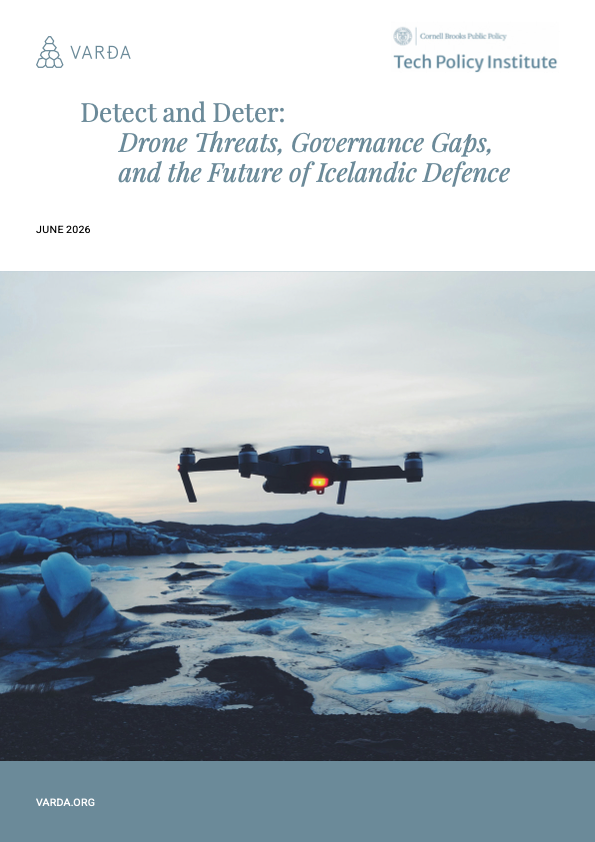
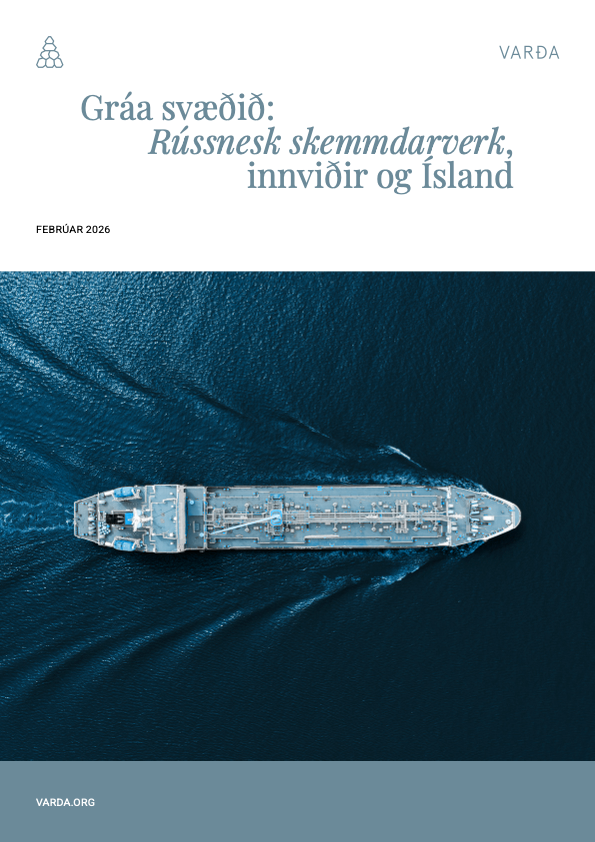
Varða has previously examined threats from drones and from sabotage against critical infrastructure. Incidents of that kind can first appear as damage, disruption to operations or unusual activity, and only later raise suspicion of criminal intent. If the risk is then judged to include the use of weapons or explosives, serious violence or a high-risk arrest, the Special Unit may need to be called in. The changed security environment therefore adds to the unit’s workload through tasks the armed call-out figures do not necessarily capture.16
Suspected sabotage of critical infrastructure also requires swift, coordinated action by the police and other responders, including at sea. On 25 December 2024 the Estlink 2 power cable between Finland and Estonia was damaged, as were telecommunications cables in the Gulf of Finland. Suspicion fell on the oil tanker Eagle S. The Finnish police led the response and boarded the ship together with the Border Guard, supported by helicopters from the Border Guard and the Defence Forces. What first looked like accidental damage to civilian infrastructure thus became a police investigation with national security implications and called for a specialised operation at sea.17
The need for armed response extends across the country, as discussed in the previous section. In Iceland, too, the Special Unit has had to operate far from shore and with support from the Icelandic Coast Guard (Landhelgisgæsla Íslands). In 2017 a Coast Guard helicopter put Special Unit officers on board the Polar Nanoq, about 90 nautical miles (some 170 km) south-west of Iceland, where they arrested two crew members. In July 2026 the Coast Guard’s helicopter unit flew Special Unit officers to the patrol vessel Freyja. From there they and the Coast Guard’s special operations unit (séraðgerðasveit Landhelgisgæslunnar) boarded the Bandero, arrested the captain and took control of the ship.18
These cases illustrate how the geographic size of the operating area magnifies what a single task demands of the unit’s personnel. Travel to the scene takes time, requires transport by helicopter or patrol vessel and puts officers out of reach of other tasks. Meanwhile the rest of the unit must maintain armed readiness elsewhere in the country.
The changed security environment demands that the unit can manage prolonged and distant operations without readiness slipping elsewhere. Staffing, shift patterns and transport capacity must reflect that.
4. The first step is to fill the authorised positions
Filling the ten positions already authorised would increase the number of serving Special Unit officers by just under 22 per cent, a well-defined step the authorities can take at once.19 The authorised strength of 56 officers rests on no recent, published needs assessment, and so says nothing about whether it matches the unit’s tasks and the demands placed on it today. In parallel, the authorities must carry out a comprehensive assessment of the Special Unit’s role, tasks, readiness, staffing and investment needs.
Iceland’s neighbours analyse the need and publish the result. In England and Wales every police force produces an annual threat and risk assessment that sets its number of armed officers. In 2023 the police inspectorate published a review of whether forces met their own assessments. In Norway, an analysis of the organisation of the district response units has been published, and Denmark enlarged its security service’s tactical unit in 2015 on a published rationale. Legislators and the public can therefore see how the need was assessed and what was decided. No such assessment has been published in Iceland, so there is nothing to hold the authorities to.20
The assessment must show how large the unit needs to be to maintain round-the-clock readiness, carry out training and handle daily call-outs, prolonged operations and more than one serious incident at a time. It must also examine the nature of the call-outs, including the types of weapons involved, and clarify the division of tasks between the Special Unit and the district tactical teams at training level 2. It must establish which tasks the district teams perform, how their capabilities are distributed across the country and which criteria trigger the involvement of the Special Unit. The authorities must then use the assessment to draw up and publish a plan for the staffing and development of the Special Unit and the rest of the police’s armed-response capability.
The build-up ahead requires long-term, predictable funding. NATO members have committed to devote up to 1.5 per cent of GDP annually to security-related spending by 2035, including the protection of critical infrastructure, civil preparedness and resilience.21 The authorities must assess which parts of the build-up fall within the commitments Iceland has already undertaken.
There are no indications that the Special Unit’s workload will ease. That makes it all the more urgent to have enough specialised personnel available when daily call-outs, round-the-clock readiness and major operations overlap. The unit must be fully staffed and its equipment and training strengthened. The district tactical teams must also take their share of armed tasks. Neither can be done at a stroke. The build-up calls for a plan that spans more than one budget year and is reviewed regularly.
Sources
Varða estimates that each Special Unit position costs ISK 30–40 million a year, or ISK 300–400 million for the ten positions that are authorised but unfilled. The estimate rests on two public reference points. A Ministry of Justice memorandum on the finances of the National Commissioner of the Icelandic Police from September 2025 puts the average annual cost of a position at the office at approximately ISK 22 million. The 2026 supplementary budget bill costed an increase of 50 general police officers at ISK 1.25 billion a year, or ISK 25 million per position. The estimate also accounts for the cost of specialised training, equipment, shift allowances and overtime.5
- Data Science and Information Department of the National Commissioner of the Icelandic Police (Gagnavísinda- og upplýsingadeild ríkislögreglustjóra). (2026). Tölur frá lögreglu: Vopnaútköll sérsveitar [Police figures: Armed call-outs of the Special Unit] [unpublished Excel data provided to Varða on 29 April and 22 September 2026]; Þingskjal 206 [Parliamentary document 206]. (2008–2009). Svar dómsmálaráðherra við fyrirspurn Kolbrúnar Halldórsdóttur um sérsveit ríkislögreglustjóra [Answer of the Minister of Justice to a question from Kolbrún Halldórsdóttir on the Special Unit]. https://www.althingi.is/altext/136/s/0206.html; Stefán Vagn Stefánsson. (2025, 8 May). Staða sérsveitar ríkislögreglustjóra [The state of the Special Unit] [speech in Alþingi]. https://www.althingi.is/altext/raeda/156/rad20250508T105910.html
- National Commissioner of the Icelandic Police (Ríkislögreglustjóri). (n.d.). Öryggissvið [Security Division]. https://island.is/s/logreglan/rikislogreglustjori/oryggissvid; Regulation No. 774/1998 on the Special Unit of the National Commissioner of the Icelandic Police (Reglugerð um sérsveit ríkislögreglustjórans). https://island.is/reglugerdir/nr/0774-1998; Regulation No. 325/2021 on the activities, role and responsibilities of the Office of the National Commissioner of the Icelandic Police (Reglugerð um starfsemi, hlutverk og ábyrgð embættis ríkislögreglustjóra). https://island.is/reglugerdir/nr/0325-2021
- National Commissioner of the Icelandic Police. (2025, 13 November). Skipulögðum brotahópum hefur fjölgað um helming [Organised crime groups have increased by half]. https://island.is/frett/skipuloegdum-brotahopum-hefur-fjoelgad-um-helming; Elizabeth H. Redmond, James Patton Rogers, Sólrún H. Guðmundsdóttir Proppé and Kristinn Árni L. Hróbjartsson. (2026). Að finna og fæla: Ógnir vegna dróna og gloppur í opinberum viðbragðskerfum [published in English as Detect and Deter: Drone Threats, Governance Gaps, and the Future of Icelandic Defence]. Varða. https://varda.org/utgafa/ad-finna-og-faela; Sólrún H. Guðmundsdóttir Proppé and Kristinn Árni L. Hróbjartsson. (2026). Gráa svæðið: Rússnesk skemmdarverk, innviðir og Ísland [published in English as The Grey Zone: Russian Sabotage, Infrastructure and Iceland]. Varða. https://varda.org/utgafa/graa-svaedid/
- Snærós Sindradóttir. (2017, 14 June). Skotvopnaæfingum lögreglu fjölgað mikið [Police firearms training greatly increased]. Vísir. https://www.visir.is/g/2017170619571; Þingskjal 2159 [Parliamentary document 2159]. (2022–2023). Svar dómsmálaráðherra við fyrirspurn frá Arndísi Önnu Kristínardóttur Gunnarsdóttur um verklag lögreglu og sérsveitar ríkislögreglustjóra [Answer of the Minister of Justice to a question from Arndís Anna Kristínardóttir Gunnarsdóttir on the procedures of the police and the Special Unit]. https://www.althingi.is/altext/153/s/2159.html
- Ministry of Justice. (2025, 31 October). Úttekt vegna fjárhagsstöðu embættis ríkislögreglustjóra [Review of the financial position of the Office of the National Commissioner of the Icelandic Police]. https://www.stjornarradid.is/frettir/grein/2025-10-31-Uttekt-vegna-fjarhagsstodu-embaettis-rikislogreglustjora-/; Þingskjal 633 [Parliamentary document 633]. (2025–2026). Frumvarp til fjáraukalaga fyrir árið 2026 [Supplementary Budget Bill for 2026]. https://www.althingi.is/altext/pdf/156/s/0633.pdf
- Þingskjal 2159 (see note 4); Data Science and Information Department of the National Commissioner of the Icelandic Police. (2026). Tölur frá lögreglu: Vopnaútköll sérsveitar [Police figures: Armed call-outs of the Special Unit] [unpublished Excel data provided to Varða on 29 April and 22 September 2026].
- Data Science and Information Department of the National Commissioner of the Icelandic Police, Tölur frá lögreglu: Vopnaútköll sérsveitar (see note 1). Authors’ calculations.
- Data Science and Information Department of the National Commissioner of the Icelandic Police. (2026). Tölur frá lögreglu: Vopnaútköll sérsveitar eftir vopnategund [Police figures: Special Unit armed call-outs by weapon category] [unpublished Excel file provided to Varða on 22 September 2026].
- Þingskjal 206 (see note 1); Þingskjal 665 [Parliamentary document 665]. (2017–2018). Svar dómsmálaráðherra við fyrirspurn frá Albertínu Friðbjörgu Elíasdóttur um starfsemi sérsveitar ríkislögreglustjóra [Answer of the Minister of Justice to a question from Albertína Friðbjörg Elíasdóttir on the activities of the Special Unit]. https://www.althingi.is/altext/148/s/0665.html; Stefán Vagn Stefánsson, Staða sérsveitar ríkislögreglustjóra (see note 1).
- Þingskjal 206 (see note 1).
- María Sigrún Hilmarsdóttir. (2025, 17 April). Engir teknir inn í sérsveitina í ár: Ákaflega leiðinlegt [No one admitted to the Special Unit this year: Extremely unfortunate]. RÚV. https://www.ruv.is/frettir/innlent/2025-04-17-engir-teknir-inn-i-sersveitina-i-ar-akaflega-leidinlegt-441809; Þorbjörg Sigríður Gunnlaugsdóttir. (2025, 8 May). Staða sérsveitar ríkislögreglustjóra [The state of the Special Unit] [speech in Alþingi]. https://www.althingi.is/altext/raeda/156/rad20250508T110131.html; Þingskjal 753 [Parliamentary document 753]. (2025). Nefndarálit með breytingartillögu um frumvarp til fjáraukalaga III fyrir árið 2025 [Committee opinion with a proposed amendment to the third supplementary budget bill for 2025]. https://www.althingi.is/altext/156/s/0753.html; Supplementary Budget Act III for 2025, No. 53/2025 (Fjáraukalög III fyrir árið 2025). https://www.althingi.is/altext/156/s/0834.html; written information provided by a serving Special Unit officer to Varða, 13 September 2026.
- Regulation No. 774/1998 (see note 2); National Commissioner of the Icelandic Police, Öryggissvið (see note 2); Regulation No. 325/2021 (see note 2).
- Snærós Sindradóttir, Vísir, 14 June 2017 (see note 4); written information provided by a serving Special Unit officer to Varða, 13 September 2026; Þingskjal 1817 [Parliamentary document 1817]. (2023–2024). Svar dómsmálaráðherra við fyrirspurn frá Njáli Trausta Friðbertssyni um vopnuð útköll [Answer of the Minister of Justice to a question from Njáll Trausti Friðbertsson on armed call-outs]. https://www.althingi.is/altext/154/s/1817.html. The information is based on data from the National Commissioner of the Icelandic Police retrieved from the police information system LÖKE. In some cases, more than one police district was involved in the same operation, meaning that the same operation may appear under more than one district.
- Norwegian Ministry of Justice and Public Security. (2022, 7 November). Politiets bruk av maktmidler. https://www.regjeringen.no/no/dokumenter/politiets-bruk-av-maktmidler/id2946065/; Swedish Police Authority. (n.d.). Nationella insatsstyrkan. https://polisen.se/jobb-och-utbildning/jobba-hos-polisen/jobb-insatsstyrkan/; Danish Police. (n.d.). Reaktionspatruljen. https://politi.dk/om-politiet/virksomheden/reaktionspatruljen; Danish Police. (n.d.). Aktionsstyrken. https://politi.dk/om-politiet/virksomheden/aktionsstyrken
- National Commissioner of the Icelandic Police, Skipulögðum brotahópum hefur fjölgað um helming (see note 3); Sólrún H. Guðmundsdóttir Proppé and Kristinn Árni L. Hróbjartsson, Gráa svæðið (see note 3).
- Elizabeth H. Redmond, James Patton Rogers, Sólrún H. Guðmundsdóttir Proppé and Kristinn Árni L. Hróbjartsson, Að finna og fæla (see note 3); Sólrún H. Guðmundsdóttir Proppé and Kristinn Árni L. Hróbjartsson, Gráa svæðið (see note 3); Regulation No. 774/1998 (see note 2).
- Police of Finland. (2024, 26 December). Police investigating incidents in the Gulf of Finland in cooperation with other authorities. https://poliisi.fi/en/-/police-investigating-incidents-in-the-gulf-of-finland-in-cooperation-with-other-authorities; Police of Finland. (2024, 30 December). Cable ruptures also investigated as offences of aggravated interference of communications. https://poliisi.fi/en/-/cable-ruptures-also-investigated-as-offences-of-aggravated-interference-of-communications
- Reykjavík Metropolitan Police (Lögreglan á höfuðborgarsvæðinu). (2017, 18 January). Leitin að Birnu Brjánsdóttur: Tveir menn handteknir [The search for Birna Brjánsdóttir: Two men arrested]. https://island.is/frett/leitin-ad-birnu-brjansdottur-tveir-menn-handteknir; Icelandic Coast Guard (Landhelgisgæsla Íslands). (2026, 30 July). Landhelgisgæsla Íslands og sérsveit ríkislögreglustjóra tóku yfir stjórn Bandero [The Icelandic Coast Guard and the Special Unit took control of the Bandero]. https://www.lhg.is/2026/07/30/landhelgisgaesla-islands-og-sersveit-rikislogreglustjora-toku-yfir-stjorn-bandero/
- Stefán Vagn Stefánsson, Staða sérsveitar ríkislögreglustjóra (see note 1). Authors’ calculations.
- College of Policing. (n.d.). Armed policing strategic threat and risk assessment. Authorised Professional Practice. https://www.college.police.uk/app/armed-policing/armed-policing-strategic-threat-and-risk-assessment; His Majesty’s Inspectorate of Constabulary and Fire & Rescue Services. (2023, 11 July). An inspection of how effective police forces are in the deployment of firearms. https://hmicfrs.justiceinspectorates.gov.uk/publication-html/how-effective-police-forces-are-in-the-deployment-of-firearms/; Politidirektoratet. (2022). Innretning av politiets utrykningsenheter (UEH): Samfunnsøkonomisk analyse. Offentlig versjon. https://kudos.dfo.no/dokument/50140/innretning-av-politiets-utrykningsenheter-ueh-samfunnsokonomisk-analyse-offentlig-versjon-samfunnsokonomisk-analyse-offentlig-versjon; Justitsministeriet. (2015, February). Et stærkt værn mod terror: 12 nye tiltag mod terror. https://www.justitsministeriet.dk/sites/default/files/media/Pressemeddelelser/pdf/2015/Et%20st%C3%A6rkt%20v%C3%A6rn%20mod%20terror.pdf
- NATO. (2025, 25 June). The Hague Summit Declaration. https://www.nato.int/en/about-us/official-texts-and-resources/official-texts/2025/06/25/the-hague-summit-declaration